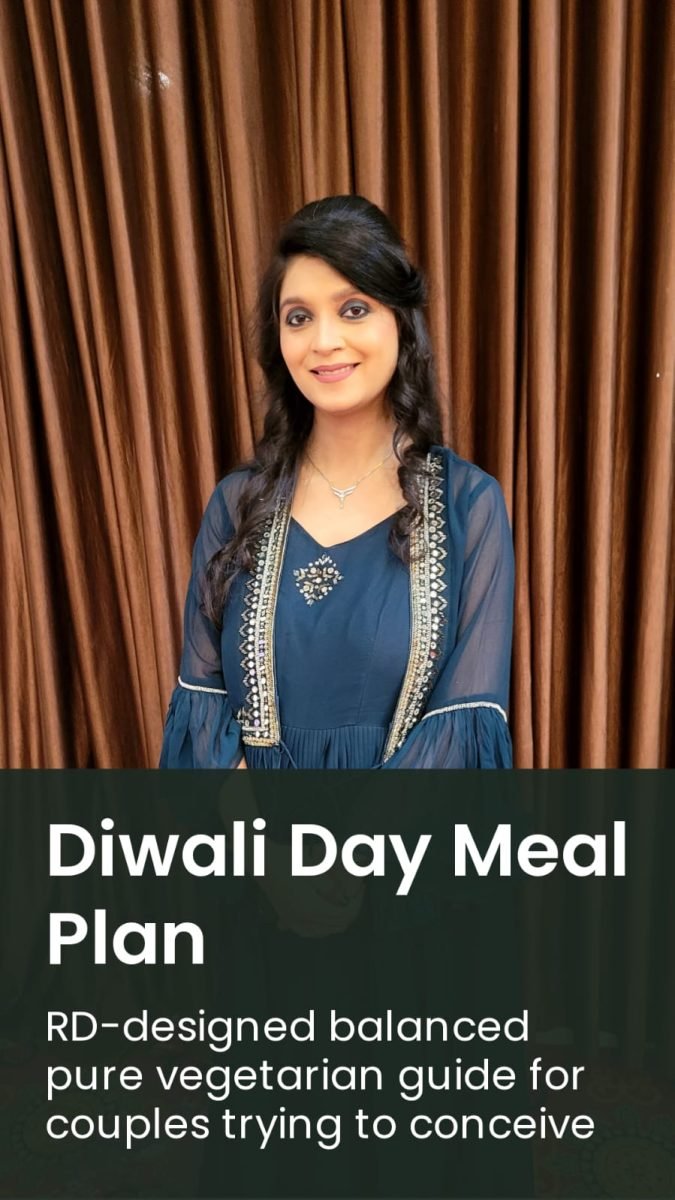
If you are trying to conceive, Diwali can bring a quiet kind of worry. The sweets keep arriving, the meals run late, and somewhere between the puja and the family dinner you start wondering whether one indulgent day will undo months of careful effort.
It will not. But a little planning can help you enjoy the festival and still look after your health. This guide walks through a full Diwali day, meal by meal, for both partners.
Can you enjoy Diwali while trying to conceive?
Yes. Eggs and sperm take roughly three months to develop, so your fertility-related nutrition is shaped by the pattern of your weeks rather than a single festival day. Regular meals, a balanced plate and moderate portions of mithai let you celebrate fully while keeping your everyday habits steady.
Why one festival day matters less than your weekly pattern
Egg and sperm development both unfold over a window of around three months. That is why preconception advice, from fertility clinics and dietitians alike, focuses on what you do consistently rather than on perfection on any given day.
This is genuinely good news at Diwali. A single evening of richer food is unlikely to define your fertility. What tends to matter more is whether the days around it stay anchored: regular meals, enough protein, vegetables, sleep and movement.
Practical takeaway: Plan the day so that the feast sits inside a balanced routine, instead of replacing it.
Your Diwali day, meal by meal
Festival days often fall apart because meals get skipped during puja and preparation, and everyone arrives at the evening feast starving. That is when portions drift upwards and blood sugar swings are largest. Eating at regular intervals prevents this.
The plan below is pure vegetarian and built around foods most Indian households already have.
| Time | What to eat |
|---|---|
| On waking | 1-2 glasses of water, 4-5 soaked almonds and 1-2 walnuts |
| Breakfast (8-9 am) | Besan or moong dal chilla stuffed with paneer or vegetables, with mint chutney or curd, and 1 seasonal fruit |
| Mid-morning (during puja or prep) | Coconut water or buttermilk, plus a handful of roasted chana or pumpkin seeds |
| Lunch (1-2 pm) | 1 katori dal, 1 katori seasonal sabzi (include a green leafy vegetable), 1-2 rotis or ½ cup rice, a large salad and 1 bowl curd |
| Pre-feast snack (5-6 pm) | Roasted makhana, sprouts chaat or a small bowl of curd |
| Evening thali (main feast) | Build your plate using the guide below |
| Bedtime (if hungry) | Warm haldi milk or a small fruit |
The pre-feast snack deserves special mention. Arriving at the feast hungry makes it much harder to eat mindfully, so this small step does more work than it seems.
How to build your evening thali
The evening meal is where most people want clear guidance. A simple plate structure works better than counting anything.
- Half the plate: vegetables. Salad, sabzi, grilled paneer or tandoori vegetables.
- A quarter: protein. Paneer, dal, chole, rajma, tofu or curd-based sides.
- A quarter: carbohydrates. Roti, puri or rice, with a moderate portion.
Fried snacks can be part of the evening. Keep them to 1-2 pieces rather than a full plate, and eat them alongside the rest of your thali instead of before it.
Practical takeaway: Fill the vegetable and protein sections first, then decide how much of the remaining space the carbohydrates and treats need.
How much mithai is reasonable?
Mithai is part of Diwali, and it does not need to be forbidden. A sensible approach is one small piece, roughly 30-40 g, eaten after the meal rather than on an empty stomach. Having sweets alongside protein, fibre and fat generally leads to a gentler rise in blood glucose than eating them alone.
If you have a choice, these tend to be better picks:
- Besan or dry-fruit ladoo
- Coconut barfi
- A small bowl of kheer
This is a practical guideline, not a rule that one sweet is "good" and another is "bad". If you have PCOS, insulin resistance or diabetes, the right portion and timing for you may differ, and that is worth discussing individually.
Daily anchors for both partners
Fertility preparation is a shared effort, and these habits apply to both of you on festival days and ordinary days alike.
| Anchor | Guide |
|---|---|
| Water | About 2-2.5 litres through the day |
| Tea and coffee | Keep to 1-2 cups |
| Alcohol | Best skipped, or kept minimal, while trying to conceive |
| Movement | A 15-20 minute walk after the main meal |
| Sleep | Aim for 7+ hours, even on festive nights |
The post-meal walk is one of the easiest habits to keep on a festival evening. Light movement after eating may help with the blood glucose response to a larger meal, and it is something the whole family can do together.
Nutrition focus: what each partner can think about
Nutrition for conception is not only a female concern. Sperm health is influenced by diet and lifestyle too, so both partners benefit from paying attention.
For her
- Folate: leafy greens, dal and citrus fruit
- Omega-3: walnuts, flaxseed and chia seeds
- Iron: pair iron-rich foods such as dal and spinach with a vitamin C source such as lemon or amla, which helps with plant-based iron absorption
For him
- Zinc: pumpkin seeds, cashews, sesame and chana
- Selenium: sunflower seeds, whole grains and nuts
- Antioxidants: colourful fruit and vegetables, and a handful of nuts daily
Notice that most of these foods already appear in the day plan above. That is deliberate. A festival menu does not need special "fertility foods"; it needs a good foundation of everyday nutrients.
It is also worth being honest about the limits. No single food or meal plan can guarantee conception, and nutrition works alongside medical care, not in place of it. What a balanced diet can do is support overall preconception health and help address nutritional gaps.
When a general plan is not enough
This plan is a general guide, not a personalised one. Some situations need individual attention:
- PCOS or insulin resistance, where carbohydrate portions and timing may need fine-tuning
- Thyroid conditions, which can interact with nutrient needs
- Diabetes, where festive eating needs careful glucose planning
- Low vitamin B12, which is more common on vegetarian diets and should be checked by blood test
- Supplements such as folic acid or vitamin D, where the right dose depends on your blood work and your doctor's advice
If you are preparing for IVF, IUI or egg freezing, your clinic's instructions come first, and nutrition can be shaped around them.
Frequently asked questions
How many sweets can I eat on Diwali while trying to conceive?
One small piece of mithai, around 30-40 g, after a meal is a reasonable guide for most couples. Eating it with or after protein and vegetables rather than on an empty stomach tends to be gentler on blood glucose. If you have PCOS or diabetes, ask your dietitian for a portion that suits your numbers.
Will one festive day affect my chances of conceiving?
A single day of richer eating is very unlikely to change your fertility. Eggs and sperm develop over roughly three months, so consistent habits across weeks matter far more. Return to your regular routine the next day without guilt.
Should my partner follow this plan too?
Yes. Sperm health is influenced by diet, sleep, alcohol and overall metabolic health, so preconception nutrition works best as a shared effort. The plan includes nutrients with particular relevance for him, such as zinc and selenium, alongside those for her.
Do I need to avoid fried snacks completely?
No. One or two pieces alongside a balanced thali is fine for most people. The aim is to keep fried food as an accent rather than the main course, and to avoid eating it on an empty stomach.
How much tea or coffee is okay while trying to conceive?
Keeping to 1-2 cups a day is a practical guide. Caffeine intake adds up across tea, coffee and some festive drinks, so it helps to count them all together.
Is alcohol okay at Diwali celebrations?
It is best to skip alcohol or keep it minimal while trying to conceive. If gatherings revolve around drinks, having a non-alcoholic option in hand can make this easier without drawing attention.
Can I take supplements like folic acid or vitamin D during the festival?
Supplements should be taken based on your blood work and your doctor's or dietitian's advice, not because it is festival season. If you are already on a prescribed supplement, continue it as directed.
What if I have PCOS, thyroid issues or diabetes?
The overall structure still helps, but portions, timing and food choices may need adjusting for your condition. A personalised plan accounts for your medical history, medication and test results in a way a general guide cannot.
Personalised support for your conception journey
A festival guide like this can steady your Diwali, but fertility nutrition is rarely one-size-fits-all. Your needs can look very different depending on your age, blood work, PCOS or thyroid status, dietary pattern and whether you are trying naturally or preparing for IVF, IUI or egg freezing.
At Health Hatch, our dietitians work with women and couples to build personalised nutrition and lifestyle plans around these individual factors. If you would like guidance tailored to you, you can speak with a Health Hatch dietitian about your preconception goals.
Wishing you and your family a joyful, well-nourished Diwali.