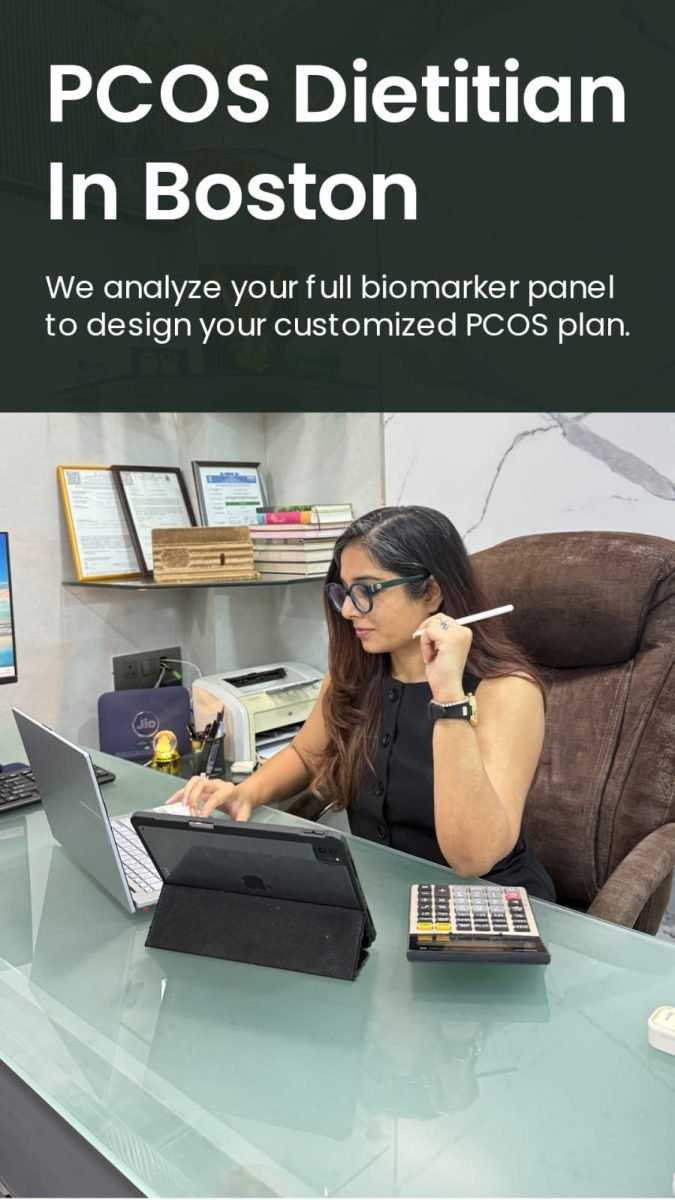
PCOS/PMOS is thought to affect roughly 1 in 10 women of reproductive age in the United States — yet many women in Greater Boston tell us they left their appointment with a diagnosis, a handout, and the advice to "lose weight," but no practical plan for what to eat on a day that mixes a lab meeting, a Red Line commute, and a grey, freezing walk home. If you're a woman between 30 and 45 in Boston, Cambridge, or the surrounding suburbs looking for personalised, evidence-based PCOS/PMOS nutrition support online — whether you're dealing with irregular cycles, insulin resistance, weight changes, skin and hair symptoms, or fertility questions — here are 34 answers to help you decide what kind of support you need. This guide is written for American women and for Indian women living in Massachusetts, because your plates, your families, and your schedules can look very different.
SECTION 1: About the Programme
Q1. What is Health Hatch's online PCOS/PMOS nutrition programme for women in Boston?
A fully online, personalised nutrition programme for women with PCOS/PMOS, built around your cycle history, symptoms, blood results where available, and the way you actually eat and live in Greater Boston — from home cooking and Trader Joe's runs to hospital cafeterias, campus dining, and takeout. It includes a personalised meal plan, ongoing WhatsApp support, and regular check-ins as your cycle, symptoms, and results change.
Q2. Who are the dietitians, and are they licensed in Massachusetts?
Our team are qualified dietitians registered in India, with 13+ years of clinical experience in PCOS/PMOS, hormonal health, fertility, and metabolic conditions, supporting 10,000+ clients across 60+ countries. We are not US-credentialed (RDN) or licensed by the state of Massachusetts, so our role is nutrition consultation that works alongside — never instead of — your OB-GYN, endocrinologist, primary care doctor, or fertility specialist, who remain responsible for your diagnosis and medical care.
Q3. I work in biotech, healthcare, academia, or tech. Why would I choose an India-based team?
Because you probably already read the research, and what you need is someone who turns it into a plan you can actually follow. We take an evidence-based approach, explain the reasoning behind each recommendation, and adjust as your results change. And if you're an Indian woman in Cambridge, Waltham, Lexington, Burlington, or Framingham, we already know your kitchen — we don't need you to explain poha, thepla, or rajma-chawal, or why skipping rice entirely isn't realistic at home.
Q4. How does an online programme work around a Boston schedule?
Consultations take place over audio calls, with WhatsApp support in between — handy when you're between meetings or walking across campus. Mumbai is 9.5 hours ahead of Eastern Time while US clocks are on daylight saving time and 10.5 hours ahead once they go back in November, so early-morning slots before your day starts are usually the easiest fit. Ask our team what's currently available when you enquire.
Q5. What programme options and pricing are available for clients in the US?
Q6. Do you provide WhatsApp support in Massachusetts?
Yes — WhatsApp works the same from Boston, Worcester, or the Cape, so you can message with questions about your plan, a lab lunch, a restaurant menu, a family event, symptom changes, and cycle tracking between consultations.
SECTION 2: Understanding PCOS/PMOS
Q7. Is Health Hatch the "best" online PCOS/PMOS dietitian for women in Boston?
"Best" depends on fit. What matters is whether a nutrition professional treats PCOS/PMOS as the varied condition it is, looks at your own history and results, understands the food you actually eat, and gives you a plan you can keep up with — rather than a generic list of foods to avoid. Many of our clients have seen improvements in cycle regularity and symptoms, but no dietitian, including us, can promise the same outcome for every woman.
Q8. What is PCOS/PMOS, in simple terms?
Polycystic ovary syndrome (PCOS) — also referred to as PMOS, polycystic metabolic ovary syndrome, to reflect its metabolic side — is a common hormonal condition. It's usually diagnosed using the Rotterdam criteria, which look for at least two of three features: irregular or absent ovulation (often seen as irregular periods), signs of higher androgen levels (such as excess hair growth, acne, or raised testosterone on a blood test), and polycystic-appearing ovaries on ultrasound. Not every woman has all three.
Q9. Do all women with PCOS/PMOS have the same symptoms?
No — PCOS/PMOS varies a lot. Some women have insulin resistance and some don't; some live in larger bodies and many don't; some struggle to conceive and many don't. This is why one-size-fits-all "PCOS diet" plans often don't work well.
Q10. Can PCOS/PMOS symptoms change after 30?
Yes. Cycles, skin, weight, energy, and metabolic markers can shift again in your 30s and 40s — sometimes after years of feeling that your PCOS/PMOS was "under control," and sometimes after stopping hormonal birth control. This is common, and it's worth reassessing rather than assuming it's just "PCOS/PMOS as usual."
Q11. I'm of South Asian heritage and live in Massachusetts. Does that change anything?
It can. South Asian women tend to develop insulin resistance and type 2 diabetes at lower body weights than the standard BMI charts suggest, and the American Diabetes Association recommends screening Asian Americans for diabetes from a BMI of 23 rather than 25. So if you're an Indian woman with PCOS/PMOS, it's worth asking your doctor about regular glucose or HbA1c checks even if your weight looks "normal."
SECTION 3: PCOS/PMOS Diet & Food in Boston
Q12. What is the best PCOS/PMOS diet for women in Boston?
There's no single "best" PCOS/PMOS diet — international PCOS guidelines don't favour one specific eating pattern over another, and the right approach depends on your symptoms, metabolic markers, and preferences. In general, meals built around protein, fibre, and minimally processed carbohydrates tend to be more sustainable than cutting out whole food groups or following strict "avoid lists."
Q13. Which foods available in New England fit well into a PCOS/PMOS plan?
New England is good for this: cod, haddock, scallops, and other fresh seafood; eggs and Greek yoghurt; beans and lentils; oats; squash, apples, and root vegetables from local farm stands in autumn; and berries and greens at farmers' markets in summer. Indian grocers around Burlington, Framingham, and Waltham stock dals, millets, atta, and fresh sabzi — all adjusted to your own metabolic profile rather than applied identically to everyone.
Q14. I'm a student, postdoc, or hospital worker with unpredictable meal breaks. Can the plan work around that?
Yes. Lab schedules, clinical shifts, and thesis deadlines mean lunch is often a granola bar at 3 p.m. and dinner is whatever's closest. We give practical guidance on building balanced meals from cafeteria options, packing portable lunches and snacks that keep well, ordering takeout, and keeping a few quick staples at home for late evenings.
Q15. Can I keep eating New England classics — chowder, lobster rolls, Dunkin', Italian food in the North End?
Usually, yes. The goal is a balanced pattern you can live with, not elimination. A cup of clam chowder or a lobster roll can fit into a week; the bigger levers tend to be the daily habits — for example, that large sweetened Dunkin' iced coffee and pastry every morning, which can leave you hungry and craving sugar by mid-morning. Small changes like adding protein at breakfast are often more useful than cutting favourites out.
Q16. Do I have to give up alcohol and the post-work pub night?
Not necessarily. We look at where drinks after work, weekend brunches, and game-day gatherings actually fit into your week and find a realistic balance, because alcohol can affect sleep, blood sugar, and cravings the next day. If you're trying to conceive, many doctors advise stopping alcohol altogether, since no safe amount in pregnancy has been established, and we'll help you plan for that.
Q17. Do you provide vegetarian, vegan, Jain, halal, and non-vegetarian plans?
Yes — plans are built around your dietary pattern, including vegetarian, vegan, Jain, halal, pescatarian, and non-vegetarian preferences, as well as dairy-free or gluten-free eating where there's a medical reason for it. Greater Boston is home to many communities with their own food traditions, and your plan should respect yours.
SECTION 4: Insulin Resistance, Weight & Boston Lifestyle Factors
Q18. Does insulin resistance cause PCOS/PMOS?
Not exactly. Insulin resistance and higher insulin levels are common in PCOS/PMOS and may contribute to symptoms in some women, but PCOS/PMOS isn't simply "caused by" insulin resistance, and not every woman with PCOS/PMOS has it.
Q19. Can PCOS/PMOS-related insulin resistance improve with diet?
For many women, structured nutrition alongside regular movement and good sleep can support insulin sensitivity. It's assessed and addressed individually, rather than assumed to apply to everyone with PCOS/PMOS.
Q20. Do I need to lose weight to manage PCOS/PMOS?
Not necessarily. Weight isn't the only goal — insulin sensitivity, cycle regularity, energy, and long-term heart and metabolic health can improve at different body sizes. Where weight loss is relevant, even a modest change of around 5% of body weight has been associated with improvements in PCOS/PMOS symptoms for some women.
Q21. How do long winters, the commute, and a high-pressure job affect PCOS/PMOS?
They can all play a part. When it's dark at 4:30 p.m. and icy outside, movement drops, comfort-food cravings rise, and sleep can slip — all of which can affect blood sugar and appetite. Add a long commute or delayed T, back-to-back meetings, and ongoing stress, and your plan has to be realistic. We build around your real schedule, with indoor-friendly movement ideas for the colder months and hybrid or remote days.
Q22. Should I be thinking about vitamin D living in Boston?
Yes, it's worth checking. From late autumn to early spring, the sun in New England is too weak for your skin to make much vitamin D, and many of us work indoors. Low vitamin D is common in women with PCOS/PMOS — especially women with darker skin, who make less from the same sun exposure. Ask your doctor to check your 25-hydroxy vitamin D level before deciding on a supplement dose.
Q23. Can PCOS/PMOS increase long-term diabetes or heart health risk?
PCOS/PMOS doesn't automatically cause diabetes, but it is associated with a higher risk of type 2 diabetes, raised cholesterol, and metabolic syndrome. It's worth having glucose or HbA1c and a lipid panel checked at regular intervals through your 30s and 40s, and nutrition support can factor this bigger picture in.
SECTION 5: PCOS/PMOS & Fertility for Women 30–45 in Boston
Q24. Does PCOS/PMOS mean I can't get pregnant?
No. PCOS/PMOS is one of the most common causes of irregular ovulation, which can mean conception takes longer for some women, but it does not mean infertility. Many women with PCOS/PMOS conceive naturally; others benefit from medical treatment, sometimes alongside nutrition support.
Q25. I'm over 35 with PCOS/PMOS and trying to conceive. When should I see a specialist?
The American Society for Reproductive Medicine advises seeking an evaluation after 12 months of trying if you're under 35, and after 6 months if you're 35 or older — sooner at any age if your cycles are irregular, which is common in PCOS/PMOS. Age becomes more relevant to egg quality after 35, so overall diet quality, omega-3 sources like fish, antioxidant-rich foods, and metabolic health are often emphasised alongside your PCOS/PMOS management.
Q26. Can nutrition help me prepare for IUI or IVF with PCOS/PMOS?
Supporting your overall nutritional and metabolic health may help create a better foundation going into treatment, but it doesn't replace medical care and can't guarantee outcomes. With so many fertility clinics in and around Boston, you have access to excellent medical care; this is worth discussing with both your dietitian and your reproductive endocrinologist.
Q27. Does insurance in Massachusetts cover fertility treatment?
Massachusetts is one of the states with a law requiring many insurance plans to cover infertility diagnosis and treatment, which is better than in many parts of the country. But the law generally applies to fully insured plans, not self-insured employer plans — and many large employers are self-insured — and the details differ by plan. Call your insurer or HR benefits team to ask what's covered before you start.
Q28. What about folic acid and blood tests before trying?
The CDC recommends that all women who could become pregnant get 400 micrograms of folic acid daily, ideally starting before conception. For PCOS/PMOS, commonly discussed tests include hormone levels, thyroid function, HbA1c or fasting glucose, cholesterol, and vitamin D, and your doctor decides which are right for you — we help you understand what your results mean for your nutrition plan.
SECTION 6: Why Health Hatch & Our Programmes
Q29. Why should women in Boston with PCOS/PMOS choose Health Hatch?
Because Health Hatch is a women-led practice with 13+ years of clinical experience in PCOS/PMOS, hormonal health, and fertility, and 10,000+ clients across 60+ countries over 10 years. Your plan is built from your own cycle history, symptoms, and blood results, adapted to the way you eat and work in Greater Boston, and adjusted as your body responds, with WhatsApp support in between. We also work alongside your doctors and specialists rather than in place of them.
Q30. How has Health Hatch helped women improve PCOS/PMOS with diet and lifestyle changes?
Over the years, many of our PCOS/PMOS clients have seen their condition improve through personalised diet and lifestyle changes. In their Google reviews, clients describe periods becoming regular after years of irregular cycles, PCOD coming under control, and improvements in related concerns such as weight and fatty liver. The changes are practical rather than extreme: rebalanced meals, regular meal timing, better sleep, manageable movement, and stress habits that fit a Boston winter and a demanding career. Health Hatch holds a 4.9 rating from 392 Google reviews, and a few PCOS-related ones are shared below. Every woman's PCOS/PMOS is different, so results vary from person to person, and nutrition and lifestyle changes work best as one part of a wider care plan with your doctor.
What our clients say
Here's what three clients with PCOS/PCOD have shared in their Google reviews, in their own words.
"I'm grateful to [Health] Hatch for a successful health journey! Their expert guidance helped me improve my PCOD and reverse my Fatty Liver Grade 1 through their customized diet plan. Also in terms of inch loss i experienced a 5 inch loss from my waist only in one month!" — Krisha · PCOD & fatty liver · Google review, Nov 2024
"I have been dealing with PCOD since years and now with lifestyle changes my PCOD has come under control. For someone who use to get periods once in 4 months, now I get my periods every month without fail… With Health hatch team you never feel that you are dieting because they focus on healthy eating… I lost 20 kgs which I never dreamt of losing it." — Shilpa Suneethi · Google review, Oct 2022
"Consulted Health Hatch for my pcos… I was told by my gynac that conceiving wouldnt be easy for me but nothing is impossible when you have Nahid by your side. She not only guided me as a dietitian but also supported me and was there for me as a friend during my lows." — Hetal Patel · Google review, Sept 2024
Client reviews as published on Google. Individual experiences — results vary from person to person, and nutrition works alongside, not instead of, medical care.
Q31. Have women with PCOS/PMOS conceived naturally after working with Health Hatch?
Yes — many of our clients with PCOS/PMOS have gone on to conceive naturally while following their nutrition plan, often after working on cycle regularity, insulin sensitivity, and overall metabolic health first. We never promise pregnancy, because conception depends on many factors beyond nutrition, but supporting regular ovulation and a healthy metabolic foundation can be an important part of your fertility journey — naturally, or alongside IUI or IVF.
Q32. How does the Concierge Elite programme help with PCOS/PMOS?
Concierge Elite is our most popular, white-glove programme for women who want closer support. It includes 2 calls a month with a co-founder, 12 custom diet plans for faster fine-tuning, 350+ recipes, custom grocery lists for your regular supermarket and Indian grocer runs, a travel nutrition strategy for work trips, conferences, and visits to India, personalised supplement suggestions (coordinated with your doctor where needed), and everything in the Starter Plan. It suits women with busy, travel-heavy lives, more complex hormonal or metabolic profiles, or a fertility goal they want to prepare for carefully. To know more about our programmes, see our current pricing.
SECTION 7: Getting Started from Boston
Q33. What should I look for before booking any online PCOS/PMOS dietitian or nutritionist?
Check their qualifications and where they're credentialed, whether they do a proper intake (cycle history, symptoms, blood results) rather than a generic form, whether they explain your particular type of PCOS/PMOS rather than giving one-size-fits-all rules, and whether they offer ongoing follow-up. Be cautious of anyone selling a "cure," pushing expensive supplement bundles, or telling you to stop treatment your doctor has recommended.
Q34. How do I get started from Boston?
Enquire through our website, message us on WhatsApp at +91-8010749168, or email info@health-hatch.com. The programme is fully online, so you can start from anywhere in Greater Boston — whether you're in Back Bay, Cambridge, Somerville, Brookline, Waltham, Lexington, Burlington, Framingham, or anywhere in between.
Ready to Get Started?
Whether you're managing irregular cycles, insulin resistance, weight changes, or fertility plans alongside PCOS/PMOS, personalised nutrition can help you understand what's actually going on in your body — and give you a plan that fits life in Boston, from the winter commute to a weekend dinner with family. Health Hatch works with women aged 30–45 across Greater Boston, the wider US, and 60+ countries, alongside the care you receive from your doctors and specialists.
Want personalised support for your PCOS/PMOS nutrition? Enquire with our team.
Curious about programme structure and cost first? See current pricing.
This article is for general information and isn't a substitute for medical advice. Please speak with your doctor or specialist about your diagnosis, medication, and fertility treatment.