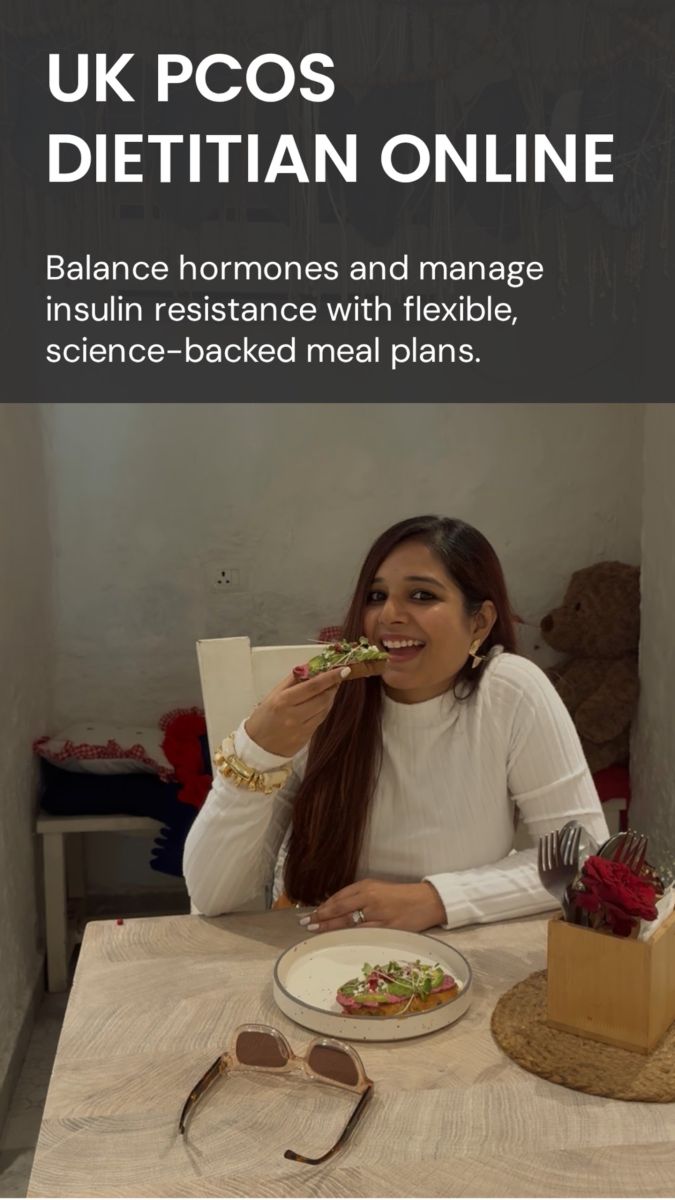
If you're an Indian woman living in the UK, your plate probably looks like two worlds at once — dal, sabzi and rotis at home, a meal deal or a Pret sandwich at work, mithai boxes at Diwali, and a Sunday roast with friends. Yet most PCOS/PMOS advice you'll find is written either for a British diet or for life in India, not for the life you actually live in between. Add long commutes, dark winters, no family nearby to help, and a higher inherited risk of diabetes, and a generic "cut carbs and lose weight" leaflet rarely helps. If you're between 30 and 45, of Indian heritage, living in the UK, and looking for personalised, evidence-based PCOS/PMOS nutrition support online — whether you're dealing with irregular cycles, insulin resistance, weight changes, skin and hair symptoms, or fertility questions — here are 36 answers to help you decide what kind of support you need.
SECTION 1: About the Programme
Q1. What is Health Hatch's online PCOS/PMOS nutrition programme for Indian women in the UK?
A fully online, personalised nutrition programme for women with PCOS/PMOS, built around your cycle history, symptoms, blood results where available, and the way you actually eat and live — Indian home food, British convenience food, and everything in between. It includes a personalised meal plan, ongoing WhatsApp support, and regular check-ins as your cycle, symptoms, and results change.
Q2. Who are the dietitians, and are they registered in the UK?
Our team are qualified dietitians registered in India, with 13+ years of clinical experience in PCOS/PMOS, hormonal health, fertility, and metabolic conditions, supporting 10,000+ clients across 60+ countries. We are not registered with the UK's HCPC, so our role is nutrition consultation that works alongside — never instead of — your GP, gynaecologist, or fertility clinic, who remain responsible for your diagnosis and medical care.
Q3. Why would an Indian woman in the UK choose an India-based dietitian?
Because we already know your kitchen. We don't need you to explain what poha, thepla, rajma-chawal, or a Gujarati thali is, or why skipping rice entirely isn't realistic in your household. We understand regional Indian eating patterns, family meal dynamics, festival seasons, and fasting traditions — and we combine that with practical knowledge of British supermarkets, workplaces, and NHS care pathways.
Q4. How does an online programme work around a UK working day?
Consultations take place by video or phone, with WhatsApp support in between. Mumbai is 4.5 hours ahead of UK time during British Summer Time and 5.5 hours ahead in winter, so early-morning slots before you log on, lunchtime slots, and early-afternoon slots on work-from-home days usually work well.
Q5. What programme options and pricing are available for UK clients?
Q6. Do you provide WhatsApp support in the UK?
Yes — WhatsApp works the same from the UK, so you can message with questions about your plan, a family dinner, a wedding in India, travel, symptom changes, and cycle tracking between consultations.
SECTION 2: Understanding PCOS/PMOS for Indian Women
Q7. Is Health Hatch the "best" online PCOS/PMOS dietitian for Indian women in the UK?
"Best" depends on fit. What matters is whether a nutrition professional treats PCOS/PMOS as the varied condition it is, looks at your own history and results, understands the food you actually eat, and gives you a plan you can keep up with — rather than a generic list of foods to avoid. Many of our clients have seen improvements in cycle regularity and symptoms, but no dietitian, including us, can promise the same outcome for every woman.
Q8. What is PCOS/PMOS, in simple terms?
Polycystic ovary syndrome (PCOS) — also referred to as PMOS, polycystic metabolic ovary syndrome, to reflect its metabolic side — is a common hormonal condition. In the UK it's usually diagnosed using the Rotterdam criteria, which look for at least two of three features: irregular or absent ovulation (often seen as irregular periods), signs of higher androgen levels (such as excess facial hair, acne, scalp hair thinning, or raised testosterone on a blood test), and polycystic-appearing ovaries on ultrasound. Not every woman has all three.
Q9. Does being of Indian heritage change how PCOS/PMOS shows up?
It can. Research suggests women of South Asian heritage with PCOS/PMOS tend to have more insulin resistance at a similar body size than women of white European heritage, and symptoms like excess hair growth may be more noticeable. This is one reason "lean PCOS/PMOS" — PCOS/PMOS with a normal BMI — is common in Indian women and is easy to overlook if the only advice given is to lose weight.
Q10. I'm not overweight. Can I still have PCOS/PMOS and insulin resistance?
Yes. Many Indian women with PCOS/PMOS have a BMI in the "healthy" range but still carry more weight around the middle, and may have insulin resistance or raised blood sugar markers. In these cases the focus shifts from weight loss to meal composition, protein, strength training, sleep, and metabolic markers.
Q11. Can PCOS/PMOS symptoms change after 30 — or after moving to the UK?
Yes to both. Cycles, skin, weight, energy, and metabolic markers can shift again in your 30s and 40s — sometimes after years of feeling that your PCOS/PMOS was "under control," and sometimes after stopping the pill. Many women also notice changes after moving countries: a new routine, more convenience food, less daily walking, colder weather, less sunlight, and the stress of building a life away from family can all play a part.
SECTION 3: PCOS/PMOS Diet — Indian Food, British Life
Q12. What is the best PCOS/PMOS diet for Indian women in the UK?
There's no single "best" PCOS/PMOS diet — the international evidence-based PCOS/PMOS guideline doesn't favour one specific diet over another, and the right approach depends on your symptoms, metabolic markers, and preferences. For many Indian women, the most useful changes aren't about cutting out rice or roti, but about the balance on the plate: more protein and vegetables, fewer refined carbohydrates, and portions that match your activity levels.
Q13. Do I have to cook elaborate meals like roti, sabzi, dal, and rice every day?
No. A full home-style spread of roti, sabzi, dal, and rice takes time most working women in the UK simply don't have on a weekday — especially without family help in the kitchen. Your plan includes one-pot meal recipes built around your schedule, so you can get a nutritionally balanced meal from a single pot instead of cooking three or four separate dishes. Think vegetable-and-moong dal khichdi with paneer or eggs, a millet or quinoa pulao with chana and mixed vegetables, a spinach-and-chickpea curry, or a masoor dal and vegetable soup — each with protein, fibre-rich vegetables, and a measured portion of carbohydrate in one dish.
These recipes are designed to be easy to cook and easy to carry: most can be batch-cooked on a Sunday, portioned into containers for work lunches, and reheated quickly for weeknight dinners. They're also simple to scale up, so the whole family can eat the same meal. You don't have to give up your rotis and rice either — on days when you do cook a traditional meal, we help you adjust portions and balance the plate, and introduce swaps like jowar, bajra, or ragi, which are easy to find in Indian grocers across the UK.
Q14. Which Indian and UK foods work well together in a PCOS/PMOS plan?
From the Indian kitchen: dals and whole pulses, chana, rajma, paneer, curd, eggs, besan, sprouts, and plenty of sabzi. From the UK supermarket: Greek yoghurt, porridge oats, eggs, tofu, oily fish like salmon and mackerel, frozen vegetables and berries, and seeded bread. The aim is a plan you can shop for in one trip — whether that's a big supermarket or your local Indian grocer — adjusted to your own metabolic profile.
Q15. I'm vegetarian. How do I get enough protein?
This is one of the most common gaps we see. Many vegetarian Indian diets rely heavily on carbohydrates, with dal as the main protein. We help you build protein into every meal using paneer, curd, Greek yoghurt, tofu, soya chunks, sprouts, besan, lentils, eggs if you eat them, and practical options for busy days. Vegetarian and vegan women should also discuss vitamin B12 with their GP, as low levels are more common without animal foods.
Q16. I rely on meal deals, Pret, or Deliveroo during the week. Can the plan work around that?
Yes. Between the commute, the office, and cooking for the family in the evening, convenience food is a reality for most working women in the UK. We give practical guidance on building a better meal deal, choosing from the high-street chains near your office, ordering Indian takeaways without the heavy naan-and-curry crash, and keeping a few quick staples ready — such as pre-cooked dal, boiled chana, or frozen parathas used thoughtfully.
Q17. What about chai, biscuits, namkeen, and mithai?
You don't need to give them up. The goal is a pattern you can live with, not elimination. We look at how many cups of sugary chai, biscuits, bhujia, or sweets actually fit into your week and find a realistic balance — for example, adjusting sugar in chai, pairing snacks with protein, and planning for mithai rather than feeling guilty about it.
Q18. How do I manage Diwali, weddings, family visits, and festival season?
Festival season, big family gatherings, visiting parents or in-laws, and trips to India for weddings can easily throw a plan off for weeks. We plan ahead for these periods — what to eat before a function, how to manage sweets and fried food without restriction, and how to get back on track afterwards without a punishing "detox."
Q19. I observe fasts like Navratri, Ekadashi, Karva Chauth, or Ramadan. Can the plan accommodate this?
Yes. Many traditional fasting foods — sabudana, potatoes, fried snacks, and sweets — are very high in quickly digested carbohydrate, which can affect blood sugar and energy. We help you plan fasting and breaking-fast meals that respect your practice while keeping protein and balance in place. If you take medication such as metformin, check with your GP before fasting.
Q20. Do you provide Jain, vegan, eggetarian, and halal-friendly plans?
Yes — plans are built around your dietary pattern, including vegetarian, Jain, eggetarian, vegan, halal, and non-vegetarian preferences, as well as dairy-free or gluten-free eating where there's a medical reason for it.
SECTION 4: Insulin Resistance, Diabetes Risk & UK Lifestyle Factors
Q21. Does insulin resistance cause PCOS/PMOS?
Not exactly. Insulin resistance and higher insulin levels are common in PCOS/PMOS and may contribute to symptoms in some women, but PCOS/PMOS isn't simply "caused by" insulin resistance, and not every woman with PCOS/PMOS has it.
Q22. Why does South Asian heritage matter for diabetes and heart health risk?
People of South Asian heritage in the UK have a higher risk of type 2 diabetes — Diabetes UK estimates it is two to four times more likely than in the white population — and tend to develop it at a younger age and at lower body weights. For this reason, NICE recommends lower BMI thresholds for South Asian adults: 23 as the point where health risk rises, and 27.5 for obesity. PCOS/PMOS adds to this risk, so it's worth ensuring your blood glucose is checked regularly.
Q23. Can PCOS/PMOS-related insulin resistance improve with diet?
For many women, structured nutrition alongside regular movement — especially strength training — and good sleep can support insulin sensitivity. It's assessed and addressed individually, rather than assumed to apply to everyone with PCOS/PMOS.
Q24. Do I need to lose weight to manage PCOS/PMOS?
Not necessarily. Weight isn't the only goal — insulin sensitivity, cycle regularity, energy, and long-term heart and metabolic health can improve at different body sizes. Where weight loss is relevant, even a modest change of around 5% of body weight has been associated with improvements in PCOS/PMOS symptoms for some women.
Q25. How do long commutes, desk jobs, NHS shifts, and living away from family affect PCOS/PMOS?
They can all play a part. Long sitting hours, irregular meals, late dinners, night shifts, poor sleep, and the stress of managing work, a home, and sometimes children without family support nearby can affect appetite, cravings, and blood sugar. Your plan is built around your real schedule — including hybrid working, hospital and care shifts, and early starts — with practical movement ideas that fit around it.
Q26. Should I be thinking about vitamin D living in the UK?
Yes — even more so as a woman of Indian heritage. UK guidance advises everyone to consider a 10 microgram (400 IU) vitamin D supplement during autumn and winter, and people with brown or darker skin, including those of South Asian background, to consider taking it all year round, because darker skin makes less vitamin D from the UK's weaker sunlight. Low vitamin D is also common in women with PCOS/PMOS. Your GP can check your levels if needed.
SECTION 5: PCOS/PMOS & Fertility for Indian Women 30–45 in the UK
Q27. Does PCOS/PMOS mean I can't get pregnant?
No. PCOS/PMOS is one of the most common causes of irregular ovulation, which can mean conception takes longer for some women, but it does not mean infertility. Many women with PCOS/PMOS conceive naturally; others benefit from medical treatment, sometimes alongside nutrition support.
Q28. I'm over 35 with PCOS/PMOS and trying to conceive. Does the diet change?
Age becomes more relevant to egg quality after 35, so overall diet quality, omega-3 sources (oily fish, or walnuts, flax, and chia seeds for vegetarians), antioxidant-rich foods, and metabolic health tend to be emphasised alongside your existing PCOS/PMOS management. NHS advice is to see your GP if you're over 36 and have been trying for 6 months or more, or sooner if your periods are irregular.
Q29. Can nutrition help me prepare for IVF in the UK or in India?
Supporting your overall nutritional and metabolic health may help create a better foundation going into treatment, but it doesn't replace medical care and can't guarantee outcomes. It's also practical: many NHS areas require a BMI within a set range before funding IVF, and some Indian families in the UK consider private treatment in the UK or in India. Wherever you're being treated, we can support your nutrition before and during the process, working alongside your fertility clinic.
Q30. What about folic acid and preconception supplements?
The NHS recommends 400 micrograms of folic acid daily while trying to conceive and until 12 weeks of pregnancy. Women with a BMI of 30 or above, diabetes, or certain other risk factors may be advised to take a higher 5 milligram dose, which needs a prescription from your GP — so it's worth asking before you start trying. Vitamin D and, for vegetarians, B12 and iron are also worth discussing.
Q31. What blood tests are commonly relevant for PCOS/PMOS in the UK?
Testosterone and other hormones, thyroid function, HbA1c or fasting glucose, cholesterol, and often vitamin D, B12, and ferritin (iron stores) are commonly discussed. Your GP arranges these tests on the NHS, and we help you understand what your results mean for your nutrition plan.
SECTION 6: Why Health Hatch & Our Programmes
Q32. Why should Indian women in the UK with PCOS/PMOS choose Health Hatch?
Because you work directly with our co-founders — dietitians with 13+ years of clinical experience in PCOS/PMOS, hormonal health, and fertility — not a rotating team or an app. Health Hatch is a women-led practice that has supported 10,000+ clients across 60+ countries over 10 years. Your plan is built from your own cycle history, symptoms, and blood results, designed around Indian home food and British working life together, and adjusted every month as your body responds, with WhatsApp support in between. We also work alongside your GP and specialists rather than in place of them.
Q33. How has Health Hatch helped women with PCOS/PMOS?
Over the years, many of our PCOS/PMOS clients have seen meaningful changes with personalised nutrition support — more regular cycles, improvements in hormonal and metabolic blood markers such as insulin, glucose, and testosterone, and relief from symptoms like sugar cravings, fatigue, bloating, acne, and stubborn weight gain. Every woman's PCOS/PMOS is different, so results vary from person to person, and nutrition works best as one part of a wider care plan with your doctor. Many of our clients with PCOS/PMOS have also gone on to conceive naturally while following their plan — we never promise pregnancy, because conception depends on many factors beyond nutrition.
Q34. How do the Transformation and Concierge Elite programmes help with PCOS/PMOS?
Transformation (£319 per 3 months) is our signature 3-month reset, designed to give your hormones and metabolism time to respond. It includes monthly calls with a co-founder, 6 custom diet plans that evolve with your cycle and symptoms, eating-out guidance for meal deals, restaurants, and takeaways, 80 curated recipes, and everything in the Starter Plan — a blood report review, progress tracking, and WhatsApp support.
Concierge Elite (£549 per 3 months) is our most popular, white-glove programme. It includes 2 calls a month with a co-founder, 12 custom diet plans for faster fine-tuning, 350+ recipes, custom grocery lists for your UK supermarket and Indian grocer shop, a travel nutrition strategy for work trips and visits to India, personalised supplement suggestions (coordinated with your GP where needed), and everything in the Starter Plan. It suits women with busy, travel-heavy lives, more complex hormonal or metabolic profiles, or a fertility goal they want to prepare for carefully. Your complimentary onboarding call is the best place to decide which fits you.
SECTION 7: Getting Started from the UK
Q35. What should I look for before booking any online PCOS/PMOS dietitian or nutritionist?
Check their qualifications and where they're registered, whether they do a proper intake (cycle history, symptoms, blood results) rather than a generic form, whether they understand Indian food and don't simply tell you to stop eating it, and whether they offer ongoing follow-up. Be cautious of anyone selling a "cure," pushing expensive supplement bundles, or telling you to stop treatment your doctor has recommended.
Q36. How do I get started from the UK?
Enquire through our website, message us on WhatsApp at +91-8010749168, or email info@health-hatch.com. The programme is fully online, so you can start from anywhere in England, Scotland, Wales, or Northern Ireland — whether you're in London, Leicester, Birmingham, Manchester, or anywhere in between.
Ready to Get Started?
Whether you're managing irregular cycles, insulin resistance, weight changes, or fertility plans alongside PCOS/PMOS, personalised nutrition can help you understand what's actually going on in your body — and give you a plan that fits both sides of your life, from your mother's dal recipe to the office lunch. Health Hatch works with Indian women aged 30–45 across the UK and 60+ countries, alongside the care you receive from your GP and specialists.
Want personalised support for your PCOS/PMOS nutrition? Enquire with our team.
Curious about programme structure and cost first? See current pricing.
This article is for general information and isn't a substitute for medical advice. Please speak with your GP or specialist about your diagnosis, medication, fasting, and fertility treatment.